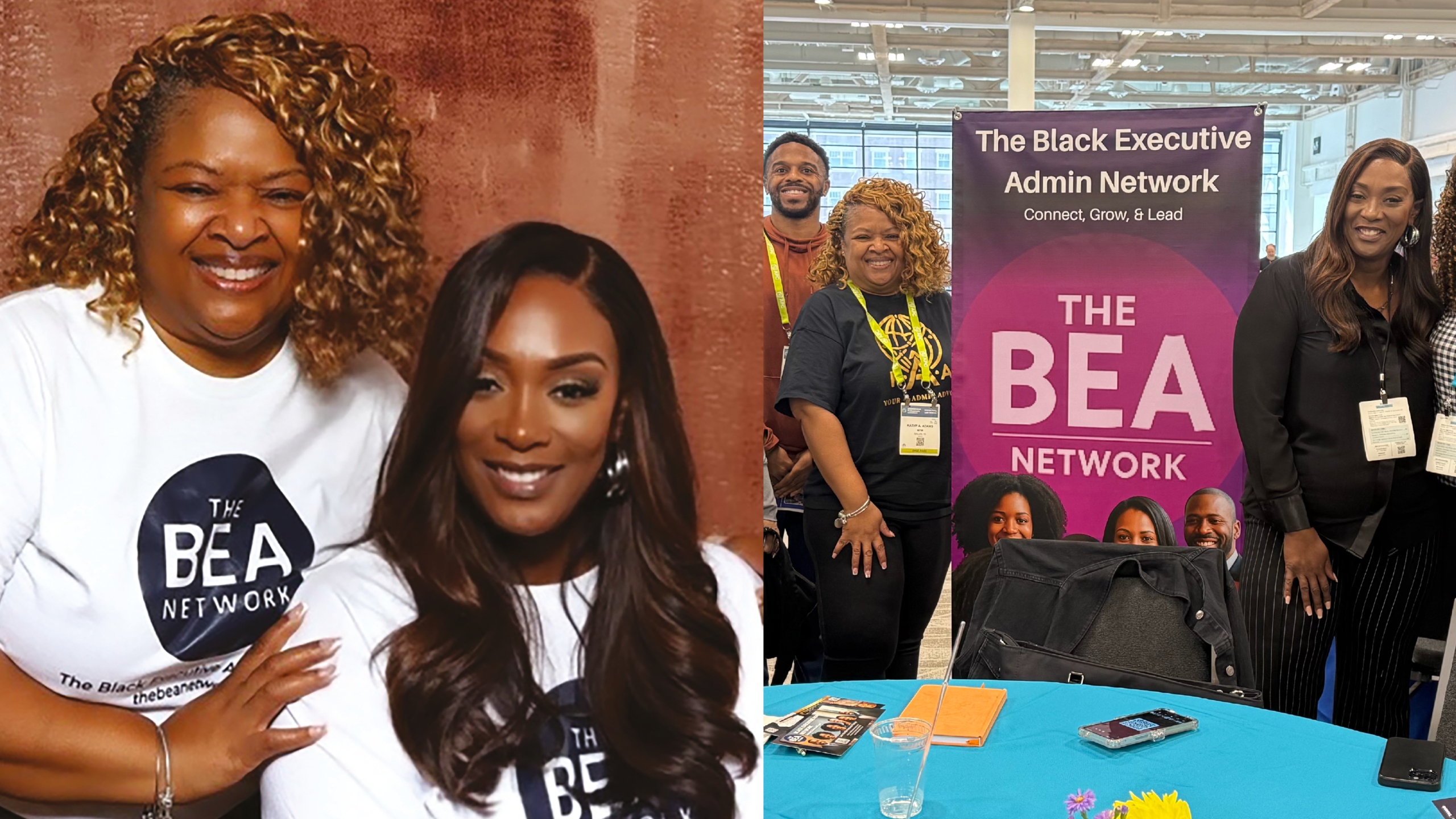
Kathy A. Adams MBA and Rhonda E. Augustus discuss advocacy, career progression, and why administrative professionals need to start claiming a seat at the table
When Kathy and Rhonda launched the Black Executive Admin (BEA) Network, they were responding to a gap they had experienced throughout their own careers: a lack of spaces where Black administrative professionals could find support, share lived experiences, and develop as leaders without having to explain why representation matters.
The BEA Network has grown into one of the most influential new voices in the administrative profession. Built around learning, networking, and advocacy, the organisation champions visibility, confidence, and career progression, while creating opportunities for members to learn from one another and collectively influence the future of the profession.
Both women bring extensive executive support experience to the table. Kathy A. Adams MBA has spent more than 27 years supporting senior leaders and is widely recognised as a speaker, trainer, and passionate advocate for administrative professionals. Rhonda E. Augustus has built a reputation as an Executive Assistant, speaker, and leadership advocate who is committed to increasing visibility and opportunity for administrative professionals.
The BEA Network is growing rapidly, but if you had to explain it in one sentence to someone who has never heard of it, what would you say?
KA: The BEA Network is a community that helps Black administrative professionals connect, grow, lead with confidence, secure their seats at the table, and advocate for themselves.
RA: The Black Executive Admin Network is a community of Black administrative professionals who foster a safe, supportive, environment for three core activities: learning and development, networking, and advocacy.
What drives you?
KA: What drives me is helping other people and seeing them succeed. I like to provide support, encouragement, and put a smile on other people’s faces as they know and learn their worth and value. In this profession, so many administrative professionals are doing important work behind the scenes, and I want them to know they are seen, needed, and capable of doing anything they put their mind and heart to.
RA: I’m personally driven by the opportunity and recognition for impact. As Black professionals, we have similar lived experiences in life and in our work environments. We know the problems and we are not shocked or surprised when we share our stories. There is something comforting and powerful about a community of people who oftentimes go unseen, misunderstood, and undervalued.
BUT!! I say this with all modesty, you may be able to ignore and drown out one or two voices, but you will have a hard time ignoring the collective voices of hundreds or thousands. There truly is strength in numbers and power in community. I love the fact that the BEA Network can create influence in the administrative space, especially when industry surveys like the Global Skills Matrix or the Salary Survey are launched. Kathy and I have our pulse on the industry and can communicate to BEA members to help promote these initiatives and bring awareness to key events and opportunities taking place in our broader administrative profession.
What’s the biggest career lesson you’ve ever learned?
KA: I learned to speak up and advocate for myself. Because if you won’t, who will? Earlier in my career, I accepted what came my way and never spoke up for myself. Today, I know how important it is to advocate, and I share it with everyone. We are our own best advocates, and if we don’t speak up for ourselves, who will? It’s like going to the doctor and expecting them to know what’s going on with you. They won’t know until you tell them. Once I started speaking up for myself, I saw a difference in my career. Advocacy is important for you to grow, develop, and be successful.
RA: Being quiet and compliant does not equate to recognition and opportunity. I thought if I said yes more than no, or if I was quiet, that would give me an opportunity to be noticed. I was getting the opposite result. I have learned to be visible, be heard, and state fearful opinions. I have also learned that my leadership journey will not look like everyone else’s journey. So, while I have a healthy appreciation for someone else’s career success, in the next five years I would like to see the administrative profession with more senior-level leadership opportunities that are aligned with the same weight and level of authority as the executives they provide operational leadership for, such as Chief Administrative Officer or Director of Administrative Operations. I must always remember the race is not won by the swift but by the one who endures until the end.
What do you love about the profession?
KA: What I love is that there’s always something new to learn. This career continues to stretch us, grow us, and open doors when we are willing to keep developing and learning new tools available to take us to the next level. I also love when administrative professionals come together, as we can learn, share, and grow from each other. As strategic business partners, we have the opportunity to support our consultants, leaders, and team in ways to help them be more organized, focused, and successful.
RA: I love the multiple doors this profession can lead you into. There are Assistants in all industries across the globe. You can be an Assistant in so many different capacities and areas of expertise. I have worked at the courthouse, the wastewater treatment plant, in consulting, accounting, cybersecurity, telecommunications, and now healthcare.
What changes would you like to see in the profession in the next 5 years?
KA: I would like to see all administrative professionals feel included, valued, and have a sense of belonging in their organizations. I want all admins to feel confident, know their worth, and advocate for themselves. I want all leadership to invest in their admins and understand the value they bring every day. I would like to see all admins recognized as strategic business partners and leaders, not just support staff. This will allow them opportunities to contribute to projects, participate in leadership initiatives, and receive a development budget to help them grow in their careers.
RA: I would like to see the administrative profession have more senior-level leadership opportunities that are aligned with the same weight and level of authority as the executives they provide operational leadership for, such as Chief Administrative Officer or Director of Administrative Operations.
Where do you get career support and advice from?
KA: I get career support and advice from different places. My team and leaders in my organization support me and my career growth. I also receive guidance from my executive coach, Joshua Washington, and Rhonda and I bounce ideas, advice, and strategy off each other. I also learn from webcasts, podcasts, e-books, and advocates in the administrative profession I follow or connect with, including Lucy Brazier. One thing I believe is that mentorship does not always have to come from someone you personally know. When you read, listen to a podcast, or attend a webcast or conference that helps you think differently and gives you a moment to think beyond what you believe, that person can become a mentor in your career. I have mentors and resources for different areas of my career, and each one helps me grow in a different way.
RA: I get career support and advice from my EA community, my EA friends, and trusted coaches and mentors within the profession
What are you most proud of in your career?
KA: When I receive feedback and testimonials from admins who are part of communities I’ve built, or from admins I’ve met along the way, it puts the biggest smile on my face. Sometimes they share that something I said helped them advocate for themselves, earn a promotion, or see the value of their work. That means everything to me. This is not about me; it’s about making a difference in someone’s life and about them seeing the value and worth they bring. I often tell my global administrative professional network at my company, “If one of us looks good, we all look good.” We all like encouragement, and it’s important to hear this when we do well, but we can pat ourselves on the back and encourage ourselves. Advocating for admins brings me so much joy! It gives me life, and I want to see others succeed in their careers and in their lives.
RA: When I look back, I can see how far I’ve come and how much I have evolved as a leader. There was a time when I was intimidated by senior leaders and hesitant to speak up in rooms with executives. Today, I have reached the level of supporting CEOs and C-suite leaders with confidence. That growth means a lot to me because I know it required more than developing technical skills. It required building executive presence, confidence, business acumen, and the ability to communicate in tough rooms. I also feel like I have reached a place in my career where my confidence, creativity, and voice have room to flourish. I’m no longer focused on simply doing the work. I’m focused on making an impact, contributing at a higher level, and helping others see what’s possible for themselves as well.
How do you protect your wellbeing?
KA: I protect my wellbeing through daily devotion, traveling at least twice a year, listening to music, spending time with family and friends, and doing Zumba. Wellbeing is so important to the success of our lives and careers. If we don’t take care of ourselves, how can we help the people who depend on us? I had to learn that when I go on vacation, I need to fully disconnect so I can recharge and come back energized to support myself, my family, my team, and my admin networks. This wasn’t easy for me to do at first; it took time, but now I can see the value of true rest. Now I can tell the difference. I encourage everyone to take time to disconnect, recharge, and return with the energy needed to keep growing and to reach the next level in their careers.
RA: I protect my wellbeing through prayer, staying humble, and maintaining a healthy mindset. I believe negativity can deprive you of fully living and recognizing the value and worth in everything you do. You cannot pour from an empty well. So much of the Executive Assistant profession is rooted in servant leadership, constantly giving, and helping others. Because of that, I make it a priority to stay grounded in my faith, protect my peace, and build resilience. Understanding emotional intelligence has also kept me grounded in understanding everything is not all about me, so I do not easily offend or see things through a victim mindset. I am quick to reframe something so it can be seen from a different perspective.
For more information on the BEA Network, visit https://thebeanetwork.com/