

Debrief, wash-up, retrospective or lessons learned, whatever your organisation calls it, Mary Beth Imbarrato explains why what happens after a project can be just as valuable as the project itself.
All projects follow a lifecycle, usually with 5 phases: initiation, planning, execution, monitoring and controlling, and closing. Each of these phases includes critical actions, or deliverables, that will elevate the level of success for your project.
Many individuals, and organizations, overlook the value of the final stage of the project lifecycle: project closing. It may be because they are unaware of the critical nature of closing out a project, or they are just ready to move on to the next one. But projects don’t immediately end with the delivery of the final product or service. The outputs from the project closing phase can be incredibly powerful and insightful to your organization. These outputs can be used to improve protocols and practices, refine tools and templates, and strengthen best practices.
Closing the Project
The project closing phase applies to any project that is ending, regardless of the reason, whether it was successfully completed, cancelled due to lack of funding, or shut down due to a shift in priorities. All projects that end must follow a project close-out process.
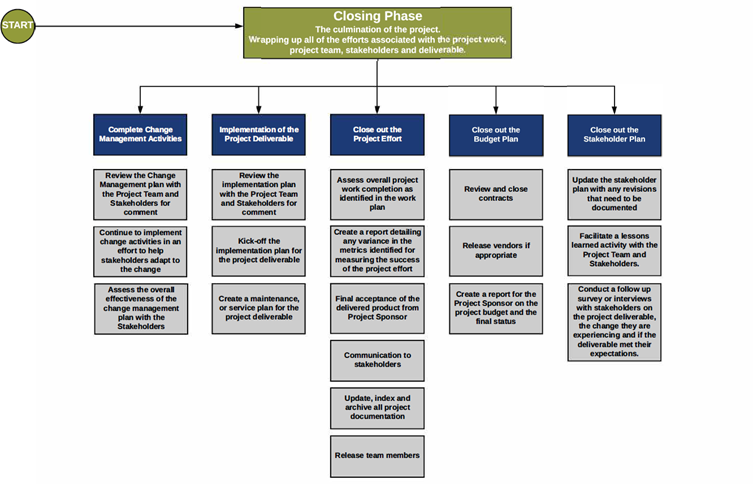
Assistants are in a unique position to effectively lead these project close-out activities. They have organizational knowledge, communication expertise, and the ability to coordinate across all teams and stakeholders.
Roles and responsibilities
The following questions need to be answered:
- Who is responsible for determining if the project is closed?
- Who will sign off on the acceptance of the deliverables?
- Who is responsible for managing the quality of the project?
- Who will be responsible for ensuring that all the project documentation has been completed and is housed in a location that everyone in the company can access?
- Who will be responsible for facilitating the lessons learned session and capturing the process improvements identified for future projects?
- Who will be responsible for drafting the final report for the project team and leadership team?
Finalizing documentation
- Charter, requirements, estimates, risk and response plans, stakeholder analysis, status reports, communication plans, decisions made, quality measures, success criteria, issues identified, lessons learned, budget and schedules
- Marketing campaigns/materials
- Vendor meetings and informational sessions – all vendors, not just the selected vendors
- User guides, FAQs, and procedure manuals
- Training classes and training materials
- Vendor processes and key contacts
- Contractual documents – as needed
Post–implementation assessment
- Performance of the project deliverable needs to be monitored – 1 week? 1 month?
- Determination of various scenarios that can impact the performance of users, such as lack of training or awareness
- Operationally, has the deliverable been integrated into the day-to-day operations? Anything need to be addressed?
- Does the deliverable need any adjustments or tweaks? Have they been identified and documented for a future upgrade?
- Have there been any other residual impacts to the company from this project that have been identified as a future project?
The project debrief report
Include items such as:
- Project details – dates, scope, team members, documentation captured, and key lessons learned
- Quality and performance measures
- Operational impacts on the organization
- Post-implementation assessment plan
- Observations and ideas captured by the project team
- Process improvements for operations and project management
- Defects or issues that may need to be addressed and when
- Overall benefits to the organization
The Project Close-Out Meeting
A structured project close-out meeting will lay a solid foundation for the activities associated with this final phase of the project lifecycle.
Lessons learned
This is an opportunity for the project team to contribute to potential process improvements for future projects in the organization. It can be an incredibly valuable experience for project team members, stakeholders, and the organization.
Consider providing the team with prompts or a format that will help them better prepare for the session. You want to capture, and clarify, observations they can share with the team members.
For example:
- Describe what worked well on the project and why.
- Describe what did not work well on the project and why.
- Describe what you learned from this project and what you would repeat for your next project.
- Is there anything that you would do differently on your next project based on what you learned with this project?
Meeting etiquette
To provide a safe and supportive environment, it is important to establish good meeting ground rules, such as “The objective of this session is to share honest and actionable feedback based on your experience with the project. No judgements, and no finger pointing.”
It is also a good idea to provide a format for raising points within the meeting. For example, “I learned that _________ and I would suggest, moving forward with other similar projects, that we take the following steps to proactively address this situation: ___________.”
Finally, all feedback and ideas need to be accompanied by an actionable response, if possible. For instance, instead of “We were sidelined by that one risk that no one saw coming…”, an appropriate, actionable response might be: “Because of what we experienced with that one risk, let’s make a commitment to review the risk register every other week during our team meeting.”
The action will be for the Assistant or project lead on any new projects to include the risk register review on the agenda for the team meeting, every other week.
Another benefit of the process is alerting the stakeholders that the project has been completed, and the results of the project. Sharing the project debrief report with the stakeholder community can provide the level of transparency that the stakeholders, organization, or board of directors may be looking for. Lastly, we want to ensure that the project deliverables are completed, delivered, and communicated as planned so the organization can leverage the overall benefits of the project effort.
The insights shared by the project team during the project close-out meeting can be beneficial for your colleagues, executives, stakeholders, and other project teams. I suggest that Assistants or project leads meet once a month to review the lessons learned and close-out reports for any projects that closed during that month. This will provide the opportunity to discuss what is working well and what improvements could be considered to improve the project management protocols and practice.
Closing a project is not simply the end of the project work. It is also an opportunity to strengthen how future projects are planned and delivered for your organization. Assistants can bring the structure, consistency, and coordination needed to make project closing a valuable experience for the organization, stakeholders, and future project efforts.