
Discover how to move from execution to true strategic partnership with Glynis E. Devine’s insights on stepping into a leadership mindset
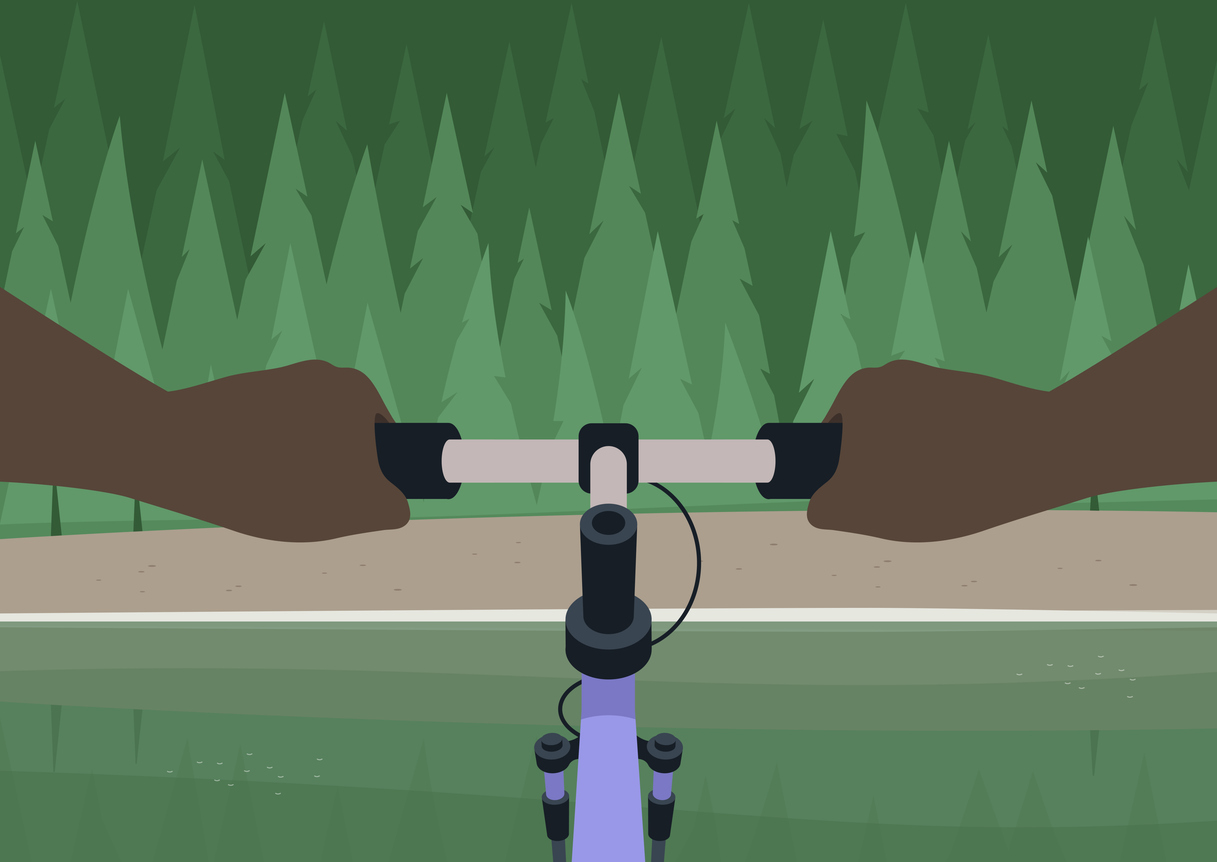
Do you know that moment when terror, excitement, and “please-don’t-let-me-die” all live in your chest at the same time? That’s learning to ride a bike. Then, in a single magical second, you hit that sweet spot when the wind rushes past your ears, and you think, “YES! Nothing can stop me now!”
That’s also what it feels like when an administrative professional decides to stop being the person who manages everyone else’s chaos, booking flights with Jenga-like prowess, and starts being the person who helps drive where the entire organisation is going. That’s the feeling of making the leap to strategic partner.
Subscriber-only Bonus
Please log into your dashboard on this site to download the “Strategic Partnership Readiness Self-Assessment Tool” which accompanies this article
The Parable of the Executor
“Are you ready?”
“Ready, Mama!”
“You remember everything we talked about?”
“Yep!”
“You’re sure you’re ready?”
“READY!” she almost sings.
I’m the mother of three children; my kids are 40, 36, and 21. And I’m sure you can imagine that I was far more fit in my twenties teaching my eldest to ride a bike than I was in my forties teaching my youngest. It’s a good thing they were both fast learners, because I’m a quarter-block jogger on my best days!
We get outside. It’s a warm afternoon and the sun makes the asphalt shimmer. She’s got her pink helmet on, pink elbow pads on, her pink bike, and it’s got pink tassels dangling from the handlebars that sparkle when the breeze rustles them and the sun catches them. My tiny bubble-gum-pink human looks like Hubba Bubba with swagger.
I’m holding on to the back of the bike, hunched over in that deeply unattractive maternal sprint position, anticipating the burn in my hamstrings if this takes any longer than a few houses. I can feel her energy buzzing through the metal frame as I wrap my hand around the back of the seat.
We get past the first house, and I let go of the back of the bike. Off she goes. Past one house, halfway past the next. And then her little foot slides off the back of the pedal, scraping her tender shin, the handlebars have a mind of their own, and she and the bike are in a heap, and she is screaming.
I run up and say, “What happened?”
“My. Foot. Slipped off the p-p-pedal and I couldn’t see where to put it back oooon,” she says from gulpy hiccups. “And it scraped me, Mama!” she finishes indignantly.
I look down and, sure enough, there’s blood starting to trickle down her leg. I scoop her up in my arms, run into the house, plop her on the counter, and gingerly clean her all up while she winces. After I’ve applied 17 strategically placed Barbie Band-Aids up her shin, her tears slow, her breathing settles, and I can see that stubborn spark in her eyes that tells me the fall scared her… but it hasn’t beaten her.
Back out to the street we head, the bike a little more scuffed and my heart a little more aware of how fragile courage can sometimes feel. I say, “Lamb, what you need to remember is: look at the pedal. Make sure the pedal sits in the centre of your foot.”
“Okay, Mama.”
“You ready?”
“I’m ready, Mama.”
“Remember what I said?”
“Watch my feet.”
“Okay?”
“Okay!
The second time around, I’m holding on to the back of her bike tighter than the first time – my camera is dangling from my wrist as I half-jog. Off she goes. I hold on until we pass one house, two houses, three – she’s got this! She’s steady. She’s wind-in-her-hair unstoppable. My heart is so happy for her. I let her go and watch her ride autonomously past the third house.
As I lift my camera, I’m looking for her in my viewfinder… and she’s gone!
I follow the distant shriek four houses away and there she is… in the neighbour’s ditch, bike two feet behind her, helmet slightly askew, cheeks flushed with a mix of fury and fear.
“What happened?” I ask.
“I fell in the ditch!”
“I can see that. How did that happen? You were doing great.”
“I didn’t see it coming.”
“You need to look where you’re going, my honey.”
She eyeballs me defiantly and says, “You said to look at my feet!”
Boom. There it is.
She did exactly what she was told, like a worldclass little executor. She watched her feet like it was her job. But when you’re so obsessed with the pedal, you miss the ditch. When you’re so focused on getting every detail “right,” you forget to look up and steer your own ride.
Isn’t this exactly what making the leap from administrative professional to strategic partner is all about? It’s the continuous shift from execution to strategy and strategy to execution: knowing when to watch your feet, when to lift your eyes to scan the road ahead, and how to do both without ending up in the ditch.
Controlling the Narrative
As EAs and professionals in the support space, that shift to strategic partner requires this: let the tools do the tasks. Leverage AI and automation to handle the repeatable, click-heavy work so your time and brainpower are freed up for what actually moves the business forward: asking sharp questions, seeing patterns, and anticipating what’s coming next.
You’re not just managing calendars and documents; you have the inside track to learn the business, connect the dots, and use your superpowers in organisation, workflow, relationship management, and the art of persuasion to influence decision-makers and steer outcomes. You are controlling the narrative, so people see you for what you are: a person of influence, not an order taker.
It starts with a shift of belief that you’re no longer an influencer; you’re a leader. If you work from home and you’re alone (heck, even if you’re on site today), say aloud and proud: “I am a leader.”
One of the biggest takeaways is this: strategic partners execute AND strategize; they design smarter systems, ask better questions, shine a light on their impact (in a non-braggy way), and leverage every AI, app, and automation tool to make sure they nail the implementation of the tasks while being seen and heard as leaders of the business.
That’s not “Assistant” energy; that’s “quiet power broker who happens to know everyone’s calendar and the company’s pressure points (and everyone’s dirty little secrets)” energy.
Master the Dance
To drive organisation change, you must master the constant dance between looking down and looking up – looking down at your feet so you don’t miss the step in front of you; looking up at the horizon so you don’t sprint straight into a metaphorical (or literal) ditch. Down at our feet. Up at the horizon. That back-and-forth is the muscle you’re building.
When I consult with an organisation’s cohort of EAs, our first step is to reverse engineer that muscle. To do that effectively, we start with the most important question before making any life- and therefore career-changing shift: Why? Why do you want to become a strategic partner? This is what I call Motive, and it’s what I have dedicated my career to understanding and helping organisations empower their leaders (ahem, that’s you, Strategic Partner!) to leverage for peak performance.
Many administrative professionals answer that their “why” is to have more influence, better control, a seat at the grownups’ table, more money (truth!). All excellent, by the way. Those reasons roll up into one powerful goal: futureproofing of your role, your income, your impact, and your career trajectory.
Fact 1 – Automation Potential
In the UK, an estimated 62% of Assistant work is automatable by AI, meaning most routine administrative tasks could be handled by technology
Globally, studies suggest that around 40–60% of work activities across many roles – especially office and administrative support – could be automated with current technology, putting admin-type tasks among the most exposed worldwide.
The share is high enough that if we’re not AI savvy, we’re filed under “nice people, outdated skillset.”
Fact 2 – Declining Roles
In the UK, clerical and secretarial roles are projected to decline by about 325,000 jobs by 2036, making them one of the few occupation groups expected to shrink.
Globally, office and administrative support roles have already been declining for a decade, and forecasts expect continued contraction as automation and AI take over routine tasks in many economies. Task-based execution alone will be obsolete. Strategic and value-based skills are the new non-negotiable.
Fact 3 – Slow AI Adoption
In the UK, roughly 70% of workers have not yet used AI to support their tasks at work, meaning a large share of administrative support staff are still avoiding AI.
Globally, surveys find that while AI use at work is growing fast, a majority of employees either rarely or never use AI tools, with significant numbers expressing uncertainty, fear, or lack of training – leaving huge productivity and upskilling gains on the table.
Bottom line is this: The administrators who will thrive are the ones who let the bots do the busywork while they step into the spotlight as strategic partners, decision shapers, and full-blown leaders of the business. The world needs strategic, value-adding humans who can:
- Think
- Decide
- Influence, and
- Partner.
Here are 3 Monday-morning-ready steps to help you make the leap to strategic partner.
Step 1: Adopt an Informed, Purposeful, Aligned Mindset
Strategic partners don’t just help out. They understand the business so well they can’t not think strategically.
Start with these power questions (for yourself and your decision-makers):
- What do we actually sell or monetise?
- What problem do we solve?
- Who are our visible stakeholders (customers, students, end users)?
- Who are our invisible stakeholders (suppliers, cleaners, facilities, IT, etc.)?
- What do each of these groups want and need?
- How do they measure success?
- How does our organisation measure success (profit, reputation, impact, brand)?
- What opportunities haven’t we tapped yet?
- What would “knock it out of the park” look like this year?
Strategic partners don’t just know what to measure; they measure what actually matters.
Use a Golden Phrase
Don’t know an answer? Use a Golden Phrase. Walk up to informed people and say: “I’d like to identify the areas where I can add the most value. Can you help me understand…?” Then ask the questions you don’t know answers to.
This instantly positions you as someone who is here to contribute at a higher level, not chase tasks.
The value proposition
Next, turn your insight into a value proposition; use this simple template:
“Our organisation ________ (does what)
for ________ (whom)
so they can ________ (outcome/impact)
without ________ (pain/obstacle).”
Example (because… omg, shoes!):
Last year, I discovered Alora Heels. If I were doing this exercise for them, it would go something like this:
“Alora Heels creates stylish, comfortable shoes
for businesswomen who are on their feet a lot
so they can look sharp and stay healthy
without spending a fortune.”
W.O.W. – Within One Week
Within one week of drafting your statement:
- Share it with 2–3 executives.
- Ask: “What would you tighten up in this message so it reflects the organisation as you see it?”
- Listen, refine, repeat.
This is how you stop being “the admin” and start showing up as the person who understands, articulates, and amplifies the business.
Invitation:
Feel free to email me your drafts and I will be happy to offer input. I aim to respond within 48 business hours (ET time zone… and yes, I’m a night hawk, so don’t judge the time stamp): bookings@glynisedevine.com
Step 2: AI and Automation
Turn the value proposition work you just did into an AI workout. Take your company-approved AI tool (ChatGPT, Claude, Perplexity, whatever your IT overlords allow) and have it walk you through those questions one at a time.
Start with the Golden Phrase of “I want to add more value to my organisation.” Then ask it to coach you, suggest better wording, and help you spot gaps. Then sanity check the final version with an informed human – your executive or another leader – so the strategy matches reality.
Privacy note: When you use AI, turn off any setting that shares data publicly or uses your content for training. Not sure how? Ask your AI, “Show me how to keep this conversation private inside my organisation.”
You can even feed it a prompt like:
“Help me build a strategic plan and generate ideas for automation that align with our organisation’s strategy.”
Unsolicited but highly loving advice: Use fewer tools and go deep. Become a power user in the ones you choose and share what you learn. Strategic partners don’t hoard information – they spread it so everyone (including them) rises.
Build a strategic plan and generate ideas for automation aligned to organisational strategy.
Step 3: Executive Presence and Brand Work
Before you can sell anyone on your value, your ideas, or your strategy, you have to be sold on you. Let’s hack your brain a little.
Do this:
- Write the name of someone you seriously admire.
- List three qualities you love about them.
- If that person were a colour, what colour would they be?
- Now write five words that describe that colour (without using the colour itself).
Here’s the plot twist: all those answers? That’s YOU. When we admire someone, they mirror something already living in us. What you admire is usually what you’re wired for.
The work now is to start seeing yourself as the embodiment of those words and qualities. Show up as that version of you. Make decisions like they would. Speak, dress, prepare, and hold your ground like that person does. That’s executive presence: you, fully turned up, on purpose.
Remember, YOU are the person who can keep the wheels on, point the bike in the right direction, and notice the ditch before everyone else lands in it.
When you:
- Understand the business so deeply you can’t help thinking strategically,
- Let AI and automation chew through the busywork while you focus on high value decisions, and
- Show up with the presence and self-belief of the people you admire,
you stop running the to-do list and start shaping the future of the organisation. You become the strategic partner leaders rely on, not the backup singer they call at the last minute.
The world of work is changing whether you participate or not; your choice is simple: ride the wave or let it ride right over you. Suit up, fire up your brain (and your bots), and behave like the Hubba-Bubba leader you already are – one Monday morning action at a time.