

Simone White calls for a redefinition on how we understand, value and invest in administrative professionals, placing their true strategic contribution back at the heart of organisational success
Key Takeaways:
- The administrative profession is a foundational business function, not just a support role.
- Assistant job titles lack global consistency, leading to confusion around skills and accountability.
- Changing titles alone won’t fix perception – clear job families and competencies are essential.
- Lessons from HR and healthcare show that redefining roles can shift organisational value and respect.
- Modern administrative professionals are strategic operators who drive operations, manage teams, and influence organisational success.
For well over a decade, increasing numbers of voices have highlighted the need to change the narrative surrounding the role of Assistants. As the world of work continues to evolve in terms of responsibilities, accountabilities, and technology, the perception of the role is long overdue for an overhaul.
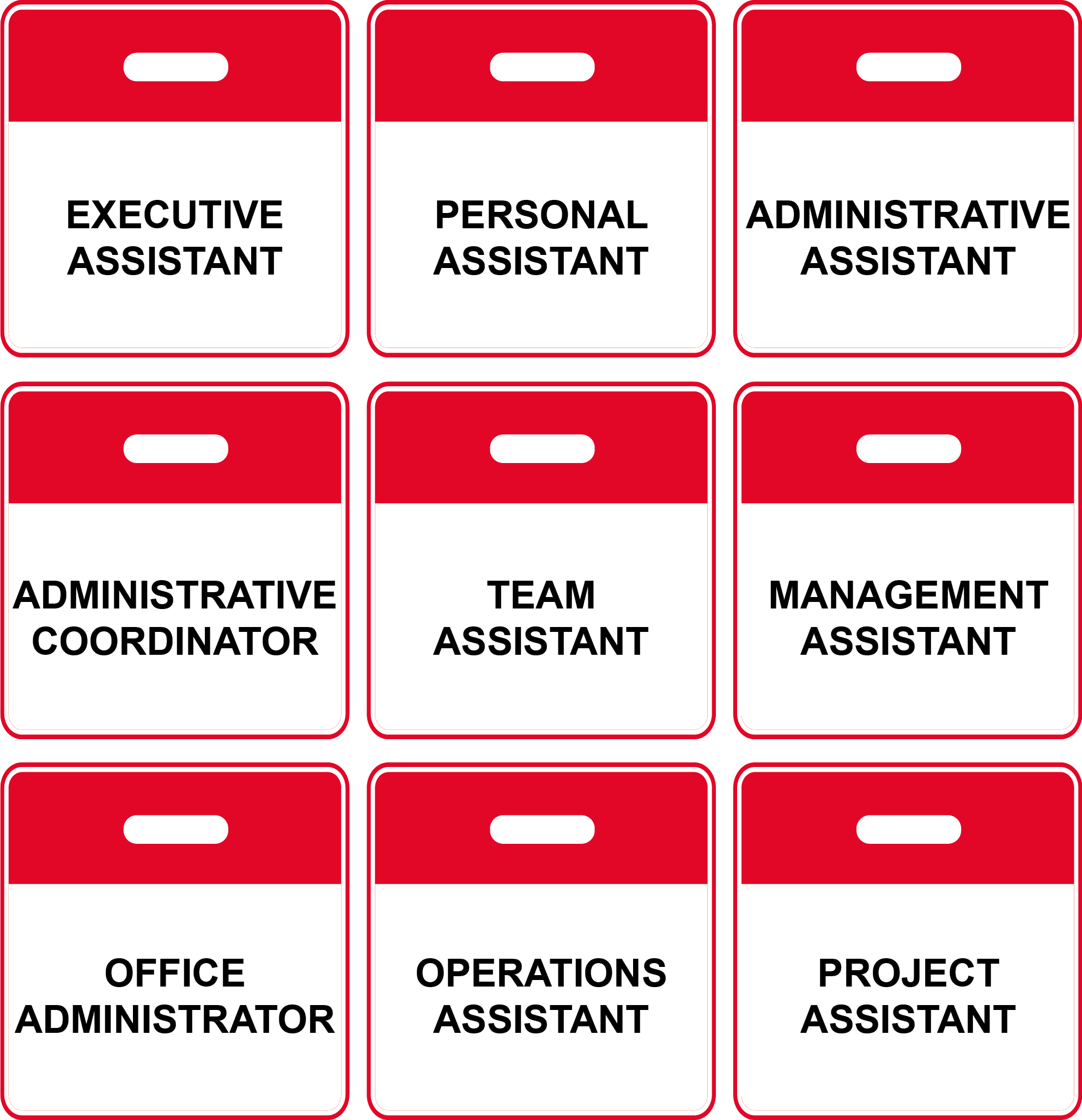
The profession itself has aimed to do this by moving away from the traditional titles of Administrative, Personal, and Executive Assistant. This has caused some division, with some highlighting that the problem is not the title, while others claim that the perception and historical view of these titles are what hold the profession back.
If we examine both sides of the case, many things ring true. There are EAs who are truly valued for the depth of knowledge they bring to their roles and their executives. They are known not for those they support, but for the value they add. This scenario tends to be on a case-by-case basis, and these individuals almost have ‘unicorn’ status, being deemed the exception, not the rule.
On the flipside, and what seems to be the general rule, is that many people recruit for EAs because that title is synonymous with a support role. They make no distinction between the need for someone to manage their calendar and someone who actively manages their time, office, and operations. This is often compounded by recruitment consultants who do not provide guidance to those they are hiring for, or if they do, their guidance is rejected.
How do we navigate the current state of play and what is needed to change the perception and outcome for the profession globally? Context is always important – for the profession itself, but also for the global workforce that the profession works alongside.
The Environment
Beyond the administrative profession, if we look at the world of work in general, whether in the public or private sector, there are some accountability indicators that are universally recognised within titles.
In organisations with corporate structures, using titles like Director, Managing Director, Principal, or Associate is an instant indicator of an individual’s breadth of accountability. The title relates not to what they do, but to the level, scope, and accountability of the role.
Where functional titles exist, these often relate to the department or role itself. For those in senior positions, this may include terms such as ‘Head of’ or a ‘C’ prefix for those in roles such as CFO, CIO, and CEO. All these titles relate not solely to what they do or who they do it for, but also to the level at which they operate and the accountability they hold. The same cannot be said for those who work within administration.
‘In our working environment, titles and functional descriptions play an important role in signalling the scope of an individual’s accountability.’
Traditional Assistant titles are often only functional, not based on an individual’s skillset but linked to the role and who they do it for. For example, you may have a PA supporting an individual/HNW, an EA who supports an executive, and a Team Assistant who works within a team. None of these ‘titles’ give an indication of skill level; rather, they indicate the function they play. Over time, these titles have become interchangeable with the function or role itself, with many using phrases such as ‘please speak to my EA’ when their Assistant is not an EA, or ‘speak to my PA’ when their Assistant is in fact an EA.
Some may think of this as semantics and believe it does not have any impact – but to decide if that is true, consider how titles are used in other professions.
For example, referring to a doctor as a nurse or a managing director as an associate would likely cause confusion and misrepresent the level of accountability and responsibility involved. In our working environment, titles and functional descriptions play an important role in signalling the scope of an individual’s accountability. While additional descriptors such as ‘Head of Finance’ or ‘Cardiology Nurse’ can clarify specific duties, the title itself provides an initial insight into the responsibility and level of accountability held by the person.
What’s in a Name?
In some instances, a change of title can provide the clarity needed to adjust mindsets. In the UK, all fully qualified doctors beneath the level of consultant were called ‘junior’ doctors. Most of these so-called ‘junior’ doctors had decades of training, yet with their title containing the word ‘junior’, the perception was that they were trainees, not fully qualified and not experienced.
This perception impacted not only those seeking medical care but also how the doctors were paid by the body that hired them, even though these institutions understood the healthcare system, its structure, impact, and the complexities of their role.
After a multi-year consultation, the decision was made to change their titles from ‘junior’ to ‘resident’ doctor. They remain in the medical doctor job family, but the change in title provided more clarity and began to change perception of the value, experience, and expertise they bring.
Would a name change work within our profession?
Many believe so. Driven by self-advocacy, the profession now has over 160 different Assistant job titles globally – a figure highlighted by the World Administrators Alliance’s Global Skills Matrix report.
‘The profession has a breadth and depth that must be understood. Not all roles are the same, but a simple name change without context is not the answer.’
However, this proliferation of titles has led to widespread inconsistency in how roles are understood, both in terms of the level at which each title operates and the competencies and skillsets required. According to the Global Skills Matrix, “many job titles mean different things dependent on the employer, sector, or where an administrator is based geographically. This means a lack of clarity when it comes to performance management of administrative professionals.”
There is a clear need for organisations to assess responsibilities, align competencies, and provide a more consistent approach to expected behaviour. The profession has a breadth and depth that must be understood. Not all roles are the same, but a simple name change without context is not the answer. We need to first assess the job family that administrative professionals sit within.
Why Job Families Matter
Alongside the discussions around administrative titles, there has been a growing number of people debating whether the job family that the role sits within also needs to be rebranded and move away from administration. In all organisations, public or private, job families play a critical role in maintaining operational stability and organisational discipline.
These families ensure that all have clarity and transparency in terms of who is accountable for what. We all understand the responsibility of technology, facilities, legal, finance, HR. No matter the individual titles of those who work within these departments, it is clear what the function of these job families is. They are globally recognisable.
For administrative professionals, the job family that they sit within can vary from firm to firm and even office to office within the same firm. Some may sit within business operations; others may sit within facilities. Many do not sit within a family at all. No matter where they sit, they are often deemed as working alongside the business, not a fundamental part of it. This lack of consistency is driving reduced clarity and transparency not only for those who work within the field, but also for those stakeholders whom they work alongside.
Lessons from Other Professions
HR teams play a foundational role within firms, yet their positioning has not always reflected their importance and the critical function they play in supporting human capital and the firm. It was once viewed as a ‘fluffy’ job, requiring soft skills only. This perception no longer exists, and the strategic management and vision that these teams provide is clearly understood. Global HR leads are now regularly part of the critical C-Suite leadership team.
The perception change did not come from a change in job family, but rather from a concerted effort to highlight the critical function that they played and to build and embed within organisations the impact that HR had. This is what changed mindsets. Interestingly, many firms moved to calling those who work within HR ‘business partners’, ensuring that they were viewed as a vital part of the business, not simply alongside supporting it.
What Is the Prevailing View of Administration?
The Cambridge dictionary provides two clear definitions which accurately describe the function and those within it:
- The people in an organisation who manage its business and operations
- The arrangements and tasks needed to control the operation of a plan or organisation
These definitions are clear. They align the who, what, and scope of what is covered. They also include accountability and the level of responsibility.
Is the problem really the term, or is it how some, including those who work within it, may view it? What needs to be recognised and articulated is the full scope and significance of the administrative profession, appreciating both its complexity and its impact across organisations.
Think about engineering. We all know that there is a large scope in that job family. We may have an engineer visit our home to fix a washing machine, yet we also know that engineers have put individuals on the moon and in the depths of the ocean.
Do we think that the engineer who is mending washing machines is any less an engineer, or do we simply know that they have a different skillset within the same field? We are also fully aware that the engineers who put individuals into space have an elevated understanding, and we may be in awe of that, but we do not diminish the engineer who fixes our appliances. They are all engineers.
Think about administration in terms of the ultimate organisation – a government. The term ‘the administration’ is fully understood and respected when we talk about it in terms of government. Those who work within it know their roles, responsibilities, and accountabilities.
In the US, we think of the 15 distinct executive departments that make up the administration.
In the UK, the 22 Cabinet members constitute the administration, with responsibility across 24 ministerial departments.
We understand the value and impact of the administration within a government, whether the individuals who work within it live up to the expected standard or not.
Embedding the Value of Administration
Administration within organisations needs to be fully understood and respected for those who work within it to feel valued. It needs to be understood as a foundational element that supports:
- The people in an organisation who manage its business and operations
- The arrangements and tasks needed to control the operation of a plan or organisation
Too often, the perception is that Assistants only support and manage tasks, but this is not an accurate reflection of all who work in this field. Assistants do not solely sit in two buckets of being reactive or proactive.
The scope of the role means we now have Assistants who actively manage teams and individuals, strategically manage time, build out CRM systems, manage offices, handle budgets, have their own direct reporting lines, lead meetings, and navigate and drive change.
Driving Clarity and Elevating Administration
There have been many recent social media memes and newspaper write-ups that devalue the skill of administrative professionals. With this common perception alive and well, it is no wonder that organisations are eliminating their administrative teams or offshoring them, with no understanding of the negative impact to their organisation’s foundation.
For the titles Assistants hold to be truly valued, the perception of the role and the family that it sits within needs a reset. Their skillsets, behaviours, and competencies must be embedded into firms as talent, like every other employee and function.
Standard practices for employee development, management, and benefits should equally apply to those who provide administrative support as they do to those within HR, technology, or any other business department.
Administrative professionals are not ‘just’ support staff; they are strategic and operational partners who manage, influence, and drive the very function of administration that keep businesses thriving.