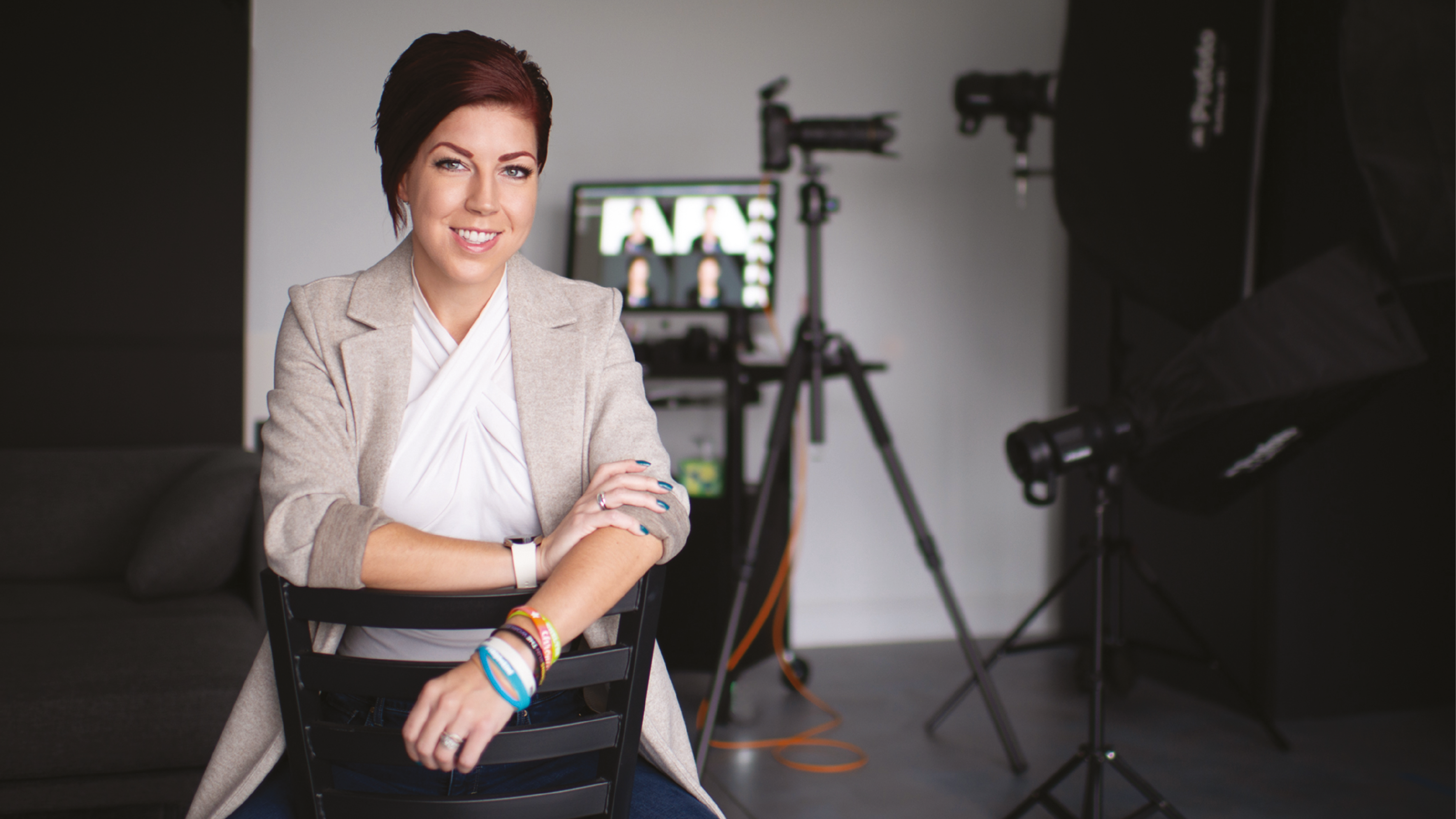
From leading the IAAP Foundation Board to shaping the culture of a US non-profit, Carissa Burgett shares how intentionality and self-awareness guide both her leadership and the example she sets for her teenage daughter
What does a typical day look like for you?
My day actually starts the afternoon before.
Before I shut my computer down, I reset. I turn the page in my planner and handwrite the next day’s meetings, deadlines, carryover tasks, and strategic notes. I organize my desk and turn off the lights. Because I work remotely when I’m not traveling, that physical reset matters. It’s how I separate work from home and ensure I begin the next morning with clarity.
As Chief of Staff, I serve as the organizational backbone. In a small nonprofit working to make a significant impact, that means wearing multiple hats. Functionally, I hold responsibilities that span COO, CFO, and Chief of Staff. My job is to ensure the organization is steady, compliant, financially sound, and strategically aligned.
Much of my day revolves around setting the tone. I check in with my remote team, assess operational priorities, and partner closely with our CEO. I attend meetings on behalf of the executive when needed and step in wherever there is misdirection or ambiguity.
Several days each week, I operate in my capacity as Chair and President of the International Association of Administrative Professionals (IAAP) Foundation, guiding governance strategy and ensuring long-term organizational stability. I prioritize director development as a pathway to strong succession planning and collaborate closely with IAAP leadership to align the strategic direction of both the Foundation and the broader Association.
The common thread across both roles is alignment. People, priorities, systems, and mission all need to move together. My role is to quietly hold that alignment in place so the organization can do its best work.
No two days look exactly the same. But every day begins and ends with intention.
What do you see that your executive doesn’t?
My executive sees decisions. I see patterns. A CEO often has to move quickly. There are external pressures, donor conversations, and board dynamics. Decisions sometimes need to be made in the moment. My role is different. I sit at the intersection of operations, finance, governance, and team culture. I see how everything connects.
When a decision is made, I’m thinking about how it lands and where it leads. How will this affect the team? Does it align with our systems? What does it signal to the board? Because I hold the operational backbone of the organization, I notice strain points early and see inefficiencies before they grow.
A recent example was our transition away from our previous shared services partner. Once the decision was made to leave, I led the assessment and selection process to rebuild our operational infrastructure. I evaluated more than 10 vendors and platforms through the lens of cost, compliance, integration, workflow, and long-term sustainability. Rather than simply replacing what we had, I looked at how the entire system functioned together and where we had an opportunity to strengthen it. The result was a streamlined structure that reduced risk, improved efficiency, and positioned the organization on stronger financial and operational footing.
Decisions rarely stay isolated. They show up in morale, workflow, and trust. My responsibility is to see the full picture and make sure we are building something stable, not just moving quickly.
How do you protect or nurture your own wellbeing?
I am someone who naturally wants to please people. For years, I believed that if I worked harder, said yes more often, and stayed endlessly available, I would move further in my career. I equated availability with value. I was wrong.
I have never received a promotion within an organization. Each time I hit the proverbial glass ceiling, I had to leave to grow. It took me a long time to recognize that giving more does not guarantee being seen or appreciated more. Often, it simply guarantees exhaustion.
In the last few years, I have become more intentional. I protect the small rituals that help me reset, like physically shutting down my workspace at the end of the day. I pause before automatically agreeing to new requests. I stop, assess, and breathe instead of spiraling into immediate action.
I also have a teenage daughter who is watching me. She sees how I lead, how I handle pressure, and how I recover when things do not go perfectly. That awareness has changed me. I want her to see a woman who is ambitious and strong, but also measured and self-aware.
We only get one life. Protecting my wellbeing is not about doing less. It is about pacing myself so I can lead well for the long term.
What is the career moment you’re most proud of?
One of the moments I am most proud of happened at IAAP Summit in July 2025. My 13-year-old daughter stood on stage and introduced me to more than 3,000 attendees as the youngest female Chair of both IAAP and the IAAP Foundation. In that moment, the title felt less about age and more about responsibility. Being the youngest in the role does not make the work lighter. If anything, it requires greater steadiness, deeper listening, and a clear commitment to honoring the legacy of those who led before me while preparing the path for those who will follow.
Serving as Chair and President of the IAAP Foundation has been one of the greatest honors of my career. The responsibility is significant, and I have had to learn how to hold both the weight and the privilege of the role without letting either distort my judgment.
I am incredibly proud of the partnership I share with Kendra Adams, Chair of IAAP, and the trust we have built in leading alongside one another. I am equally proud of the collaboration with my board, the alignment we have built with staff, and the strong partnership I have with our Chair-elect, Terri Mullan. Leadership at this level is never about one person. It is about stewardship, cohesion, and ensuring governance is thoughtful and unified.

Carissa Burgett with Kendra Adams, Chair of IAAP
The role lasts only one year. That perspective keeps me grounded. My goal is not to leave a mark for recognition, but to leave a culture of empathy, thoughtfulness, and strategic clarity that makes it easier for the next leader to step in and thrive.
What mistake have you learned from?
One of the biggest mistakes I made early in my career was underestimating the weight of my own voice.
I have never struggled to speak up. But for a long time, I did not fully respect my perspective simply because my title said “administrative.” I would offer input, then soften it. I assumed authority lived somewhere else. I learned that respect begins internally. If you diminish your own insight, others will follow your lead. When I began standing firmly in the value of my perspective, particularly in rooms where I was not the most senior person, the dynamic shifted. Not because I became louder, but because I became clearer.
If I wasn’t a Chief of Staff, I’d be…
If I wasn’t a Chief of Staff, I would probably still find myself leading or building something. I am wired that way. Even if I won the lottery tomorrow, I don’t think I could fully step away from mission-driven work. I care too deeply about governance, advocacy, and helping organizations operate well.
That said, if I had a career that wasn’t so demanding, I would absolutely take more time to travel, read stacks of books without checking my email, craft simply because it brings me joy, and finally write the novel that has been sitting in the back of my mind for years. Leadership is part of who I am. But so are curiosity, creativity, and a deep commitment to serving my community.