
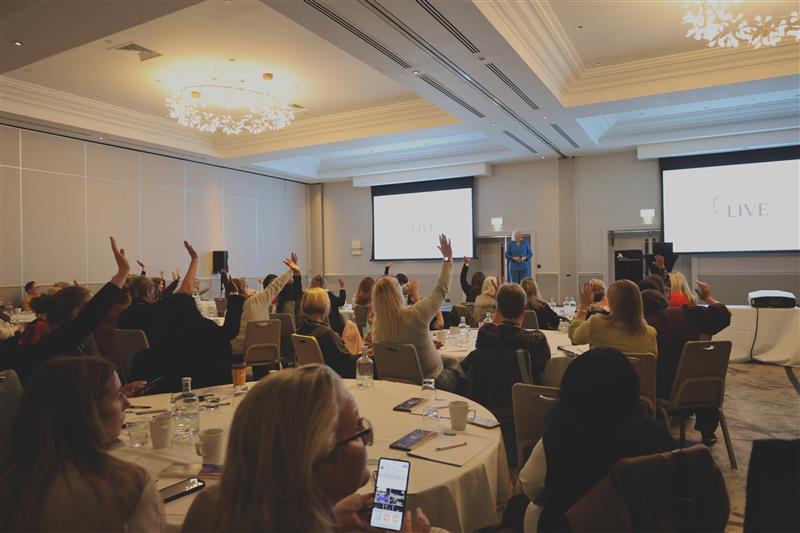
The key takeaways from the incredible speakers at our London event
Executive Support LIVE London delivered two days of insight, empowerment, and professional transformation for Assistants from across the globe.
The atmosphere buzzed with connection and possibility as delegates gathered to learn from some of the most influential voices in the profession. What became clear, session after session, is that the role of the modern Assistant is evolving faster than ever and those who invest in their growth are shaping the future of their organisations.
From AI skills to communication mastery, from confidence building to strategic influence, each speaker challenged us to think bigger about our value and to take deliberate ownership of our development. The conversations were bold, practical, and refreshingly honest – the kind of learning that shifts careers, mindsets, and trajectories.
Executive Support LIVE has always been about more than inspiration; it’s about equipping professionals with real-world tools they can apply immediately. This year’s London event raised the bar yet again, offering clarity, capability, and confidence in equal measure.
As we look ahead to the next LIVE, one thing is certain: this is where the profession comes to grow. Until then, here are eight standout lessons we’re taking forward.
A masterclass from Microsoft MVP, productivity expert, and founder and CEO of ANWOW Lizebeth Koloko-Green: Four of our favourite takeaways
Getting started: “Be mindful of AI spending. Start with the free ones and see which you use most.”
Top tip: “Let AI type emails for you: voice dictation converts speech to text, meaning you can work three times faster, reduce physical strain, and capture thoughts faster.”
Building confidence: “AI is a muscle; the more you use it, the easier it becomes. Experiment with it on your phone, use it for restaurants, travel plans, anything. Just get used to how it feels.”
It’s a skills bridge: “You don’t need to be an Excel expert anymore; you just have to know how to ask AI for help.”
Marie Herman draws on her vast experience as a motivational speaker and trainer to give us her favourite hack for confidence when speaking in public
If you’re nervous about public speaking, try FRESH.
F: Fingers. Loosen up with some jazz hands or shake your arms and hands, get moving.
R: Respiration. Calm your breath with some box breathing.
E: Eyes. The rule is every 20 minutes, look 20 feet away for 20 seconds.
S: Shoulders. Untense your posture and make circles with your shoulders.
H: Head. Work out tension with some neck rolls.
Trainer, speaker, and executive coach Laura Belgrado on why you should update your CV even if you aren’t job hunting
“I call it Botoxing your resume! Botoxing your resume is nothing to do with finding a job. Your CV is your passport to your career and your confidence. Updating your resume once a year is the best self-confidence boost you can get. You will forget what you have done otherwise and your accomplishments won’t be noted. “
Sharing her powerful personal story, speaker, trainer, mentor, and writer Simone White on impostor syndrome versus impostor moments
“Impostor syndrome, I now reframe it. What I have are impostor moments. ‘Syndrome’ makes you think it’s something you always have. ‘Moments’ mean every once in a while. I think, ‘Oh my goodness, I’m actually doing this’, but then I take up my space and I own it. I’m not an impostor; this is where I’m supposed to be. When you feel like an impostor, check your environment, because it’s often not from you but from other people thinking you’re not supposed to be there. I bolster my self-belief with knowledge and learning. I never stop learning. This knowledge provides the evidence that you need to feel worthy and valuable.”
Wellness strategist and executive coach Dr Heather Denniston demonstrates her 5 Cs of boundary setting
Cost: If you leave the situation as it is, what does it cost to do nothing?
Clear: What actually is the boundary? Get it clear with yourself first.
Communicate: What but also when and where will you have the conversation about this boundary?
Consistent: What if there is slippage?
Consequence: What about non-compliance?
President of the Global Innovation Academy for Executive Assistants Pepita Soler gives us her high trust behaviours
- Talk straight
- Demonstrate respect
- Create transparency
- Right wrongs
- Show loyalty
- Deliver results
- Practice accountability
- Listen first
- Keep commitments
- Extend trust
- Get better
- Confront reality
- Clarify expectations
Empowerment coach and author Peggy Vasquez on the importance of speaking with impact
“I am only as good as I can communicate. Your work may be excellent, but if others don’t hear it, see it, or understand it, they can’t value it. Start with the headline and not the backstory. Lead with the point, then give context. Then give the ask. This structure -headline, context, ask – makes you concise, confident, and impossible to ignore. Remove minimising language and drop words that weaken your presence:
- Just
- Actually
- Sort of
- I might be wrong, but
Use strategic pauses instead of words. Replace ‘um’, ‘you know’, and ‘like’ with silence. Pauses sound composed and give your audience time to absorb your message.
Leadership advocate Glynis E. Devine on making the leap to strategic partner and why we all need a WOW moment
You need a WOW within one week. WOW = what will you do within one week to move yourself towards strategic partnership? Choose one thing. A week from now, you should feel different because you did something different. Because if you don’t change something immediately, then inspiration dies. This is the action that you commit to. Start with the end goal in mind, then reverse-engineer your next step. WOW is the micro-decision that shapes the macro-direction of your work.