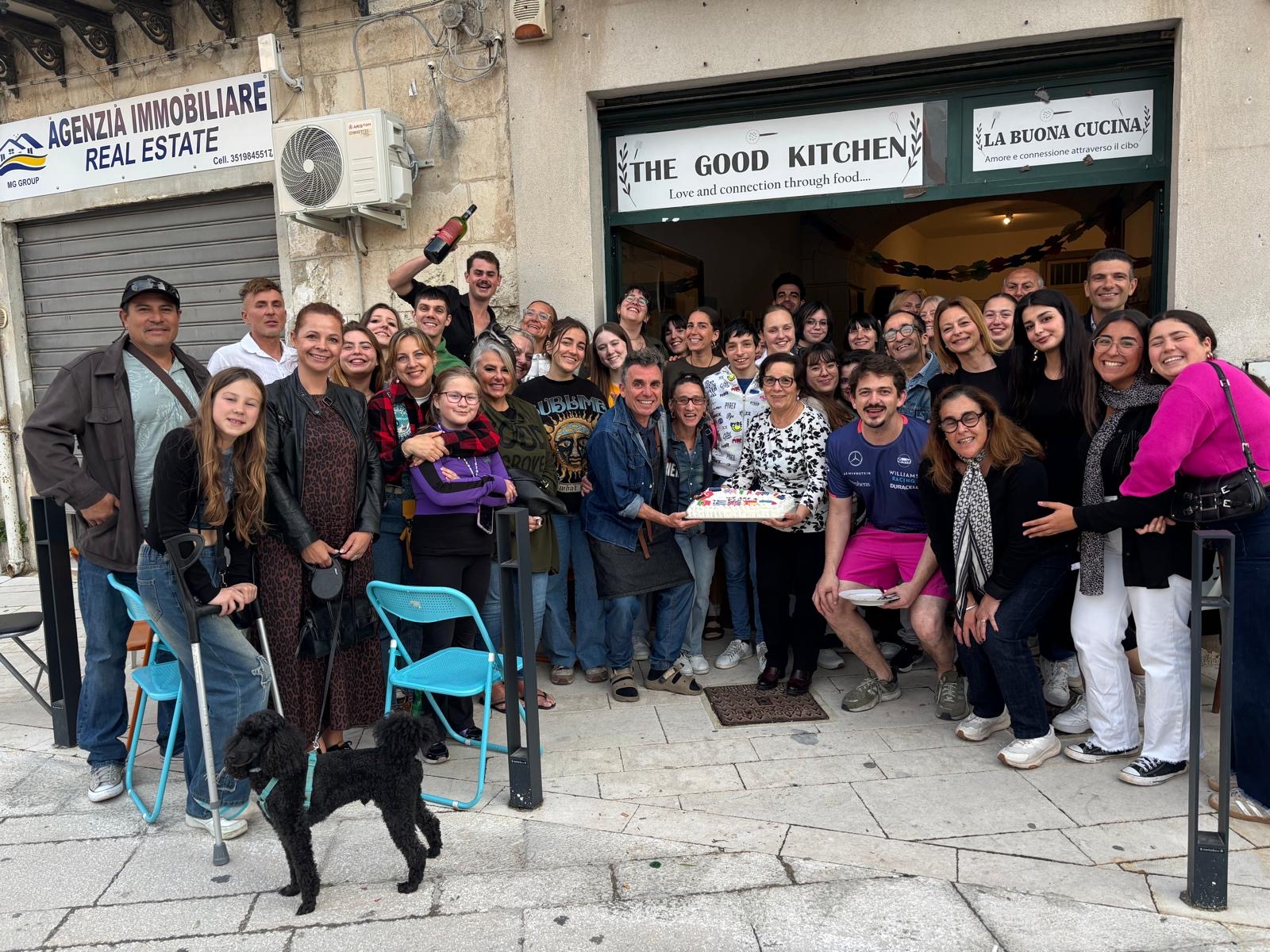
Lucy Brazier OBE speaks to Danny McCubbin about his remarkable transition from 17 years at Jamie Oliver’s side to founding The Good Kitchen in rural Sicily
After 17 years at the heart of Jamie Oliver’s organisation, Danny McCubbin made the brave decision to leave London and build a new life in rural Sicily. There, he founded The Good Kitchen, a social enterprise dedicated to rescuing food, feeding the community, and creating connection through shared meals. His journey from high-profile Assistant to social entrepreneur is a masterclass in courage, purpose, and self-awareness. Here, Danny speaks candidly about leadership, resilience, mental health, and the lessons learned from a life spent in service to others.
Lucy Brazier: Danny, it’s wonderful to speak with you again. Many of our readers will remember your first interview with us during the pandemic, but so much has changed since then. Could you start by telling us a little about how you began your career with Jamie Oliver?
Danny McCubbin: My journey began when I moved from Australia to London in 1998. Like many Australians abroad, I started temping for different companies, which gave me a great sense of the city. In 2003, a friend from Melbourne who was Jamie Oliver’s art director mentioned an opening in Jamie’s office. It was for an administrative all-rounder with project management skills. I interviewed and got the job, and not long after, I found myself walking into the offices above the restaurant Fifteen. I immediately felt the energy, the sense that this was not just a business, but a movement. Jamie had mortgaged his home to create a restaurant that trained disadvantaged young people as chefs. That social purpose really resonated with me.
Lucy Brazier: You went on to become Jamie’s PA, quite a transition from admin support to such a trusted position. What was that journey like for you?
Danny McCubbin: It was unexpected but organic. After joining the team, I became deeply involved in supporting the projects we were working on. Jamie valued people who were proactive and passionate about the mission. By the end of 2003, I was working directly with him. At that time, the team was small, fewer than twenty people, so everyone wore many hats. I learned quickly, and Jamie trusted me to take on more responsibility. Those early years taught me that a great Assistant isn’t just about administration; it’s about understanding your leader’s vision and helping to make it real.
Lucy Brazier: You spent an incredible 17 years working with Jamie Oliver. What do you think kept you there for so long?
Danny McCubbin: I loved the people and the purpose. I’d found my tribe. The culture was creative, collaborative, and compassionate. There were hard days, of course, but the work was meaningful. I always told myself I would leave only when I still loved what I was doing. That way, I’d carry the joy and energy into whatever came next. It’s something I tell anyone considering a big career change: don’t wait until you’re unhappy to move on. Leave while you’re still inspired; it makes the next step so much easier.
‘I tell anyone considering a big career change, don’t wait until you’re unhappy to move on. Leave while you’re still inspired.’
Lucy Brazier: You were heavily involved in the Fifteen Restaurant project, which became iconic for its social mission. What did that experience teach you?
Danny McCubbin: Fifteen changed my life. It was the beating heart of Jamie’s work, a restaurant that trained hard-to-reach young people, many of whom had been in gangs or struggled with addiction. We didn’t ask, ‘What’s wrong with you?’ We asked, ‘What’s right with you?’ That simple reframing transformed lives. Watching those apprentices grow into confident, talented chefs was incredible. I became a mentor for many of them and even completed a life coaching qualification to support them after they graduated. That experience taught me the transformative power of trust and opportunity, values I still carry into everything I do today.
Lucy Brazier: You’ve often said that Assistants should seek out opportunities within their organisation to grow. How can they do that in practical terms?
Danny McCubbin: Growth doesn’t always mean promotion; it means curiosity. I always volunteered for projects outside my core role. I joined working groups on diversity and inclusion, helped run community initiatives, and got involved in mentoring programmes. By saying yes to those opportunities, I learned so much more about the organisation, its people, and its culture. It also made my job more fulfilling. For Assistants, I think that’s key, to approach your role not just as a job, but as a space to learn, contribute, and evolve.
Lucy Brazier: You worked alongside Jamie during some of his most high-profile campaigns, like the School Dinners project. What did that teach you about leadership and influence?
Danny McCubbin: That period was extraordinary. I sat in meetings with Channel 4 producers, civil servants, and health experts as we tried to change how Britain fed its children. Jamie led with passion and authenticity. What struck me most was his humility. If someone used a term he didn’t understand, he’d stop and ask. That vulnerability was powerful. It taught me that strong leaders are open learners. He also made sure that everyone, from interns to executives, had a voice. That inclusivity created trust and innovation. I learned that leadership isn’t about hierarchy; it’s about listening.
‘I learned that leadership isn’t about hierarchy; it’s about listening.’
Lucy Brazier: You eventually left London to move to Sicily, where you now run The Good Kitchen. That’s a remarkable transition. What led you to take that leap?
Danny McCubbin: It was both a professional and personal decision. After 17 years, I felt ready for a new chapter. I’d become Culture Manager at Jamie Oliver HQ, overseeing food education and internal wellbeing, and I loved it. But I also felt burned out by city life. I’d been volunteering in Italy for a rehabilitation community called San Patrignano, which inspired me deeply. When I learned about the one-euro house scheme in Sicily, I saw an opportunity to rebuild, literally and metaphorically. I bought a small house, secured my residency just before Brexit, and started imagining what a small community kitchen could look like.
Lucy Brazier: Tell us about The Good Kitchen. What makes it special?
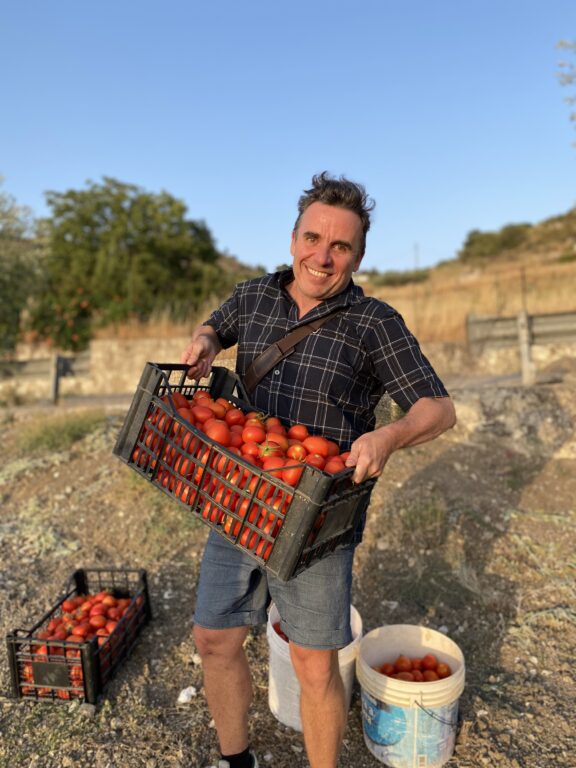
Danny McCubbin: The Good Kitchen is a community food project based in Mussomeli, Sicily. We rescue surplus food from supermarkets, over 24 tonnes in three years, and turn it into meals for people in need. We’re open four days a week and host a communal Sunday lunch where people from all walks of life eat together. It’s become a place of connection. We also run a Women’s Circle and youth cooking classes. Food is our vehicle, but community is our purpose. I don’t take a wage from it – it’s fully volunteer-led. The most rewarding thing is seeing people regain a sense of belonging and dignity.
Lucy Brazier: You also ran a huge food relief effort in London during the pandemic. How did that experience influence you?
Danny McCubbin: That time was intense and emotional. I had planned to move to Italy, but COVID hit and I couldn’t leave. So I started volunteering. We cooked thousands of meals a week in church kitchens for people who couldn’t access food. Many were falling through the cracks – families without internet access, elderly people unable to download food vouchers. We built a network of chefs, many from Fifteen, and got food to those who needed it most. It reminded me of the power of community in action, but it also reinforced my belief in keeping projects human-sized. The Good Kitchen was born from that – small, local, tangible impact.
‘I tell people, especially Assistants, that self-care is not indulgence, it’s maintenance.’
Lucy Brazier: Your work now blends purpose with wellbeing. What lessons have you learned about balance and resilience?
Danny McCubbin: The biggest lesson is to look after yourself first. When I was in London, I was constantly ‘on’. I ignored signs of burnout until I had health scares. Now, my life is slower and intentional. I split my time between the kitchen and a small olive farm by the sea. I garden, I ferment vegetables. It’s grounding. Resilience isn’t about pushing through; it’s about pausing, listening, and restoring your energy. I tell people, especially Assistants, that self-care is not indulgence, it’s maintenance.
Lucy Brazier: Many of our readers are considering big life or career changes. What advice would you give them?
Danny McCubbin: Set your intentions, but don’t grip them too tightly. I believe in writing things down; it’s how I manifest. Every morning, I do ‘morning pages’ to clear my mind. When I stopped forcing my dream to move to Italy, the opportunity arrived naturally. Sometimes the universe needs space to surprise you. Also, be open to learning new skills and to meeting people outside your usual circles. Big change rarely comes from comfort.
Lucy Brazier: From your experience, what makes an exceptional Assistant indispensable to their executive?
Danny McCubbin: Trust, empathy, and initiative. Building trust takes time, often a year or more, and it’s earned through reliability and discretion. An Assistant who anticipates rather than reacts becomes invaluable. Equally, emotional intelligence matters. When you understand the human behind the job title, you can support them in ways that go far beyond logistics. In many ways, Assistants are the cultural glue of an organization; they hold everything together quietly but powerfully.
Lucy Brazier: Mentorship has clearly been a thread throughout your career. How important has that been for you personally?
Danny McCubbin: It’s been everything. Mentoring others has given my work purpose. I always say mentoring is a mirror; it teaches you as much about yourself as it does about the person you’re guiding. At Fifteen, I mentored apprentices who had never been told they were good at anything. Watching them stand taller, believe in themselves, and thrive was incredibly fulfilling. Now at The Good Kitchen, I see the same transformation in young volunteers. If you’ve climbed the ladder, send it back down for someone else.
Lucy Brazier: You’ve also written a book about your journey, The Good Kitchen. Tell us about that process.
Danny McCubbin: Writing the book was a way to document the first year of The Good Kitchen – from leaving London to creating a new life in Sicily during the pandemic. It’s part memoir, part manual, with recipes and reflections from the kitchen. I wanted to show that purpose doesn’t have to come from grand gestures – it can come from small, consistent acts of kindness. Getting it published wasn’t easy, but I stayed true to what I wanted to share. It’s been humbling to see how many people have reached out, saying the story gave them hope.
Lucy Brazier: Finally, what’s next for you and The Good Kitchen?
Danny McCubbin: We’ve recently received a grant from the Antonio Carluccio Foundation to launch a young chefs’ programme, where cooks from around the world can come to Sicily to learn about community food projects. We’re also developing an online hub so others can create their own Good Kitchens wherever they are. Personally, I’d like to share more of what I’ve learned about mental health and purpose, perhaps through a Substack or speaking engagements. I turned 60 last year, and I feel more energised and creative than ever. Life isn’t about perfection; it’s about connection, and I hope my work continues to reflect that.