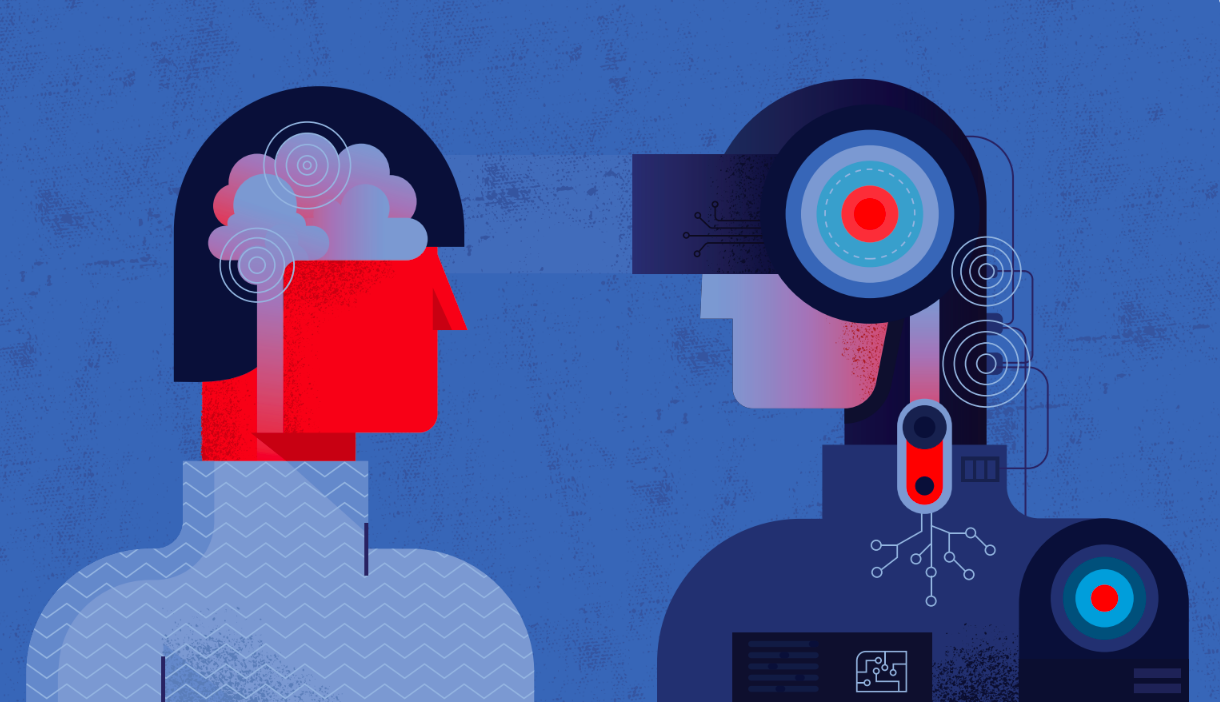
Peter Ivanov reveals how AI is evolving from digital helper to creative collaborator – reshaping how we connect, think, and achieve together
Picture an individual in your organization who, with AI at their side, performs like an entire team – faster, more cohesively, and with less stress. That isn’t science fiction; it’s the reality detailed in a striking March 2025 Harvard Business School study involving 776 Procter & Gamble team members. The verdict is clear: AI is no longer just a helpful tool – it’s becoming the orchestrator that empowers every individual to shine like a full ensemble.
Unveiling the Experiment
Researchers divided participants into four groups:
- Individuals working solo
- Individuals using AI assistance
- Classic two-person teams
- Teams enhanced with AI
Incredibly, solo professionals equipped with AI matched the performance of human duos – and faster. They completed tasks about 16% quicker than those without AI, delivering similar quality outputs with remarkable efficiency.
AI as the Universal Interpreter
One of the most eye-opening findings was how AI bridged entrenched functional divisions. In many companies, technical teams talk “tech,” and commercial teams speak “sales.” Rarely do these worlds collide productively. With AI, participants produced ideas that were both technically sound and business-savvy. In effect, AI helped the engineer talk “customer,” and the marketer think “product architecture.” It was as if everyone became bilingual – across domains, not languages.
Feeling Better, Working Better
Beyond performance, AI lifted spirits. Participants reported higher energy and optimism, and lower frustration and anxiety. Specifically, enthusiasm rose by 0.457 standard deviations, while frustration decreased by 0.233. AI didn’t just deliver better results – it made the work experience more enjoyable and cohesive.
Democratizing Expertise
Perhaps the most significant shift? Novices began acting with expert-level insight. AI supplied 24/7 mentorship: patiently explaining complex ideas and helping users apply them in real time. Imagine a junior marketing coordinator navigating supply chain nuances. Instead of juggling calendar invites, briefing meetings, and jargon translation, she now engages in a dynamic dialogue with AI – getting clear, tailored insights instantly.
More Depth, More Agility
The study also found that AI-augmented individuals produced longer, richer deliverables while working 12–16% faster. With routine tasks handled by AI, people could focus on strategy, nuance, and creativity. The result: smarter outputs in shorter time – like a sports car that’s both faster and more fuel-efficient.
What Does This Mean for Leaders?
1. Reimagine team configurations
If AI enables one person to perform at team-level throughput, traditional staffing models need rethinking. It’s not about headcount reduction – it’s about redistributing human effort toward high-value, complex challenges.
2. Cultivate AI fluency
The edge lies not only in ownership of AI tools, but in the ability to collaborate with AI. Team members need to learn how to partner with AI: how to prompt, iterate, and elevate results through effective interaction.
3. Embrace hybrid fluency
AI fosters integrative thinking across commercial, technical, and creative domains, making siloed expertise less valuable than cross-functional fluency and collaboration.
4. Double down on emotional intelligence
As AI handles analytics and logistics, human strengths like empathy, cultural insight, and relationship-building matter more than ever.
Outlook
AI is swiftly evolving from a “smart assistant” to a true creative ally – a co-pilot in innovation. The way forward isn’t asking whether AI will replace people. Instead, ask: Are your teams ready to collaborate with AI?
Embrace this AI teammate revolution – and empower your people to perform, feel, and think at the level of elite teams.